

logoRobuschi_CMYK.jpg

Why Aeration Systems Lose Efficiency Over Time

Aeration accounts for 45–75% of total energy consumption in most wastewater treatment plants. Yet blowers and diffusers are often selected, operated, and maintained as separate assets.

As diffuser membranes foul and stiffen:

  • Backpressure gradually increases
  • The blower drifts away from its efficient duty point
  • Energy consumption rises silently
  • Control margin and oxygen stability decline

Most of these inefficiencies appear long before alarms are triggered.
Aeration Efficiency Is a System Outcome

This white paper explains why long‑term aeration performance cannot be optimised by focusing on single components.

Instead, real efficiency is achieved when:

  • Blower technology is aligned with diffuser backpressure behaviour
  • Membrane material selection matches blower sensitivity
  • System ageing and maintenance are planned from day one

When blowers and diffusers are treated as interdependent elements, plants achieve:

  • Lower and more predictable energy use
  • Improved process stability
  • Reduced lifecycle cost
  • Performance that remains closer to design values over time

What You’ll Learn in This White Paper

- How diffuser fouling and membrane stiffness affect blower efficiency

- Why turbo blowers are highly efficient — but sensitive to pressure drift

- Where lobe, screw, and turbo blowers perform best in WWT applications

- How membrane materials (EPDM, coated EPDM, PEEK) influence backpressure evolution

- The hidden lifecycle cost of poor blower–diffuser pairing

- How proper selection slows efficiency loss as systems age

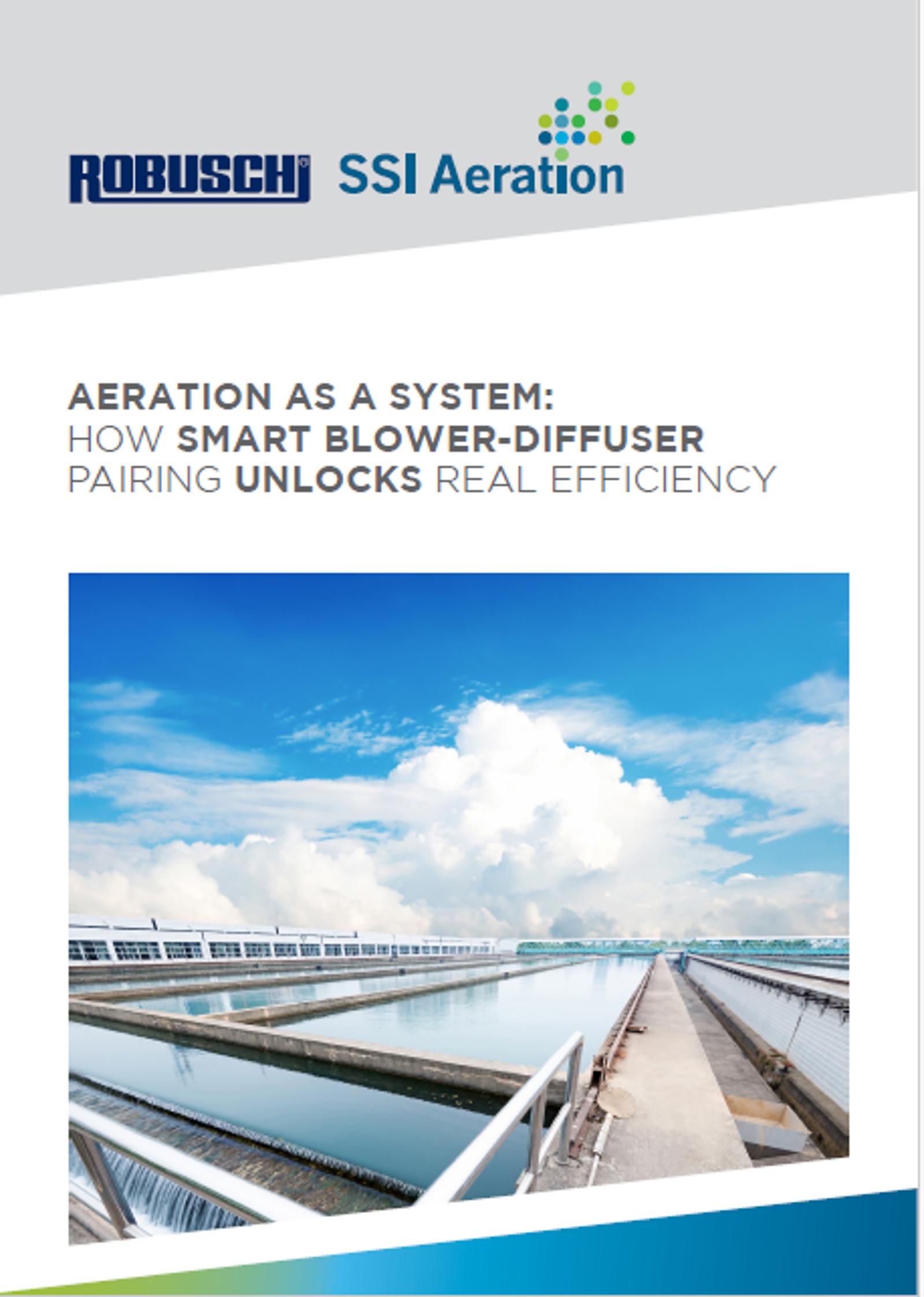
WP_Cover_eng.png

A Practical Guide for Real World Wastewater Conditions

The white paper compares lobe, screw, and high‑speed turbo blowers under real plant conditions, not just day‑one design points.

It explains:

  • Why positive displacement technologies tolerate pressure variation better
  • How internal compression improves efficiency under variable demand
  • When turbo technology delivers maximum value — and when it does not

This is not a theory paper — it is a practical decision guide based on system behaviour over time.

Developed by Aeration Specialists

This white paper is authored by Robuschi and SSI Aeration, combining:

  • Decades of experience in wastewater blower technology
  • Industry‑leading diffuser engineering and membrane know‑how

Together, Robuschi and SSI provide integrated aeration solutions designed to reduce total cost of ownership and improve long‑term performance in municipal and industrial wastewater treatment plants.