Blowers
Positive Displacement Blowers
Digital Solutions for Blowers
Rotary Lobe Blowers
Screw Blowers
Turbo Blowers
Multistage Centrifugal Blowers
Side Channel Blowers
Engineered to Order Blowers
Compressors
Low Pressure Screw Compressors
Screw Blowers
Engineered To Order Compressors
Pumps
Liquid Ring Vacuum Pumps
Centrifugal Pumps
Industries & Applications
Wastewater Treatment
Aquaculture
Environmental
Chemical and Pharmaceutical
Food and Beverage
General Manufacturing
Lime and Cement
Medical
Mining
Plastics
Power Generation and Oil & Gas
Pulp and Paper
Parts & Services
Find Parts and Kits
Service and Maintenance Plans
Genuine Parts
Lubricants
Service and Repair
Ancillaries
Range Of Filters
Knowledge Base
Discover and Learn
Select and Specify
Operate and Maintain
Events and Webinars
News
About Us
Global Presence
Careers
Robuschi Software
Your Feedback

Air compression technology used in rotary screw blowers is based on one of the most basic compression principles, which is positive displacement. This allows rotary screw blowers to provide a constant air flow at a fixed speed, even when air pressure is variable, making them the right choice for many businesses. Whatever the application and industry, air compressed systems still need to meet numerous stringent requirements in a fast-growing market.


RSW – Low Pressure Screw Compressor and Screw Blower 2023

To load this content, approve your cookie preferences and allow the required cookies.
Rotary Screw Blowers – its Basic Working Principles

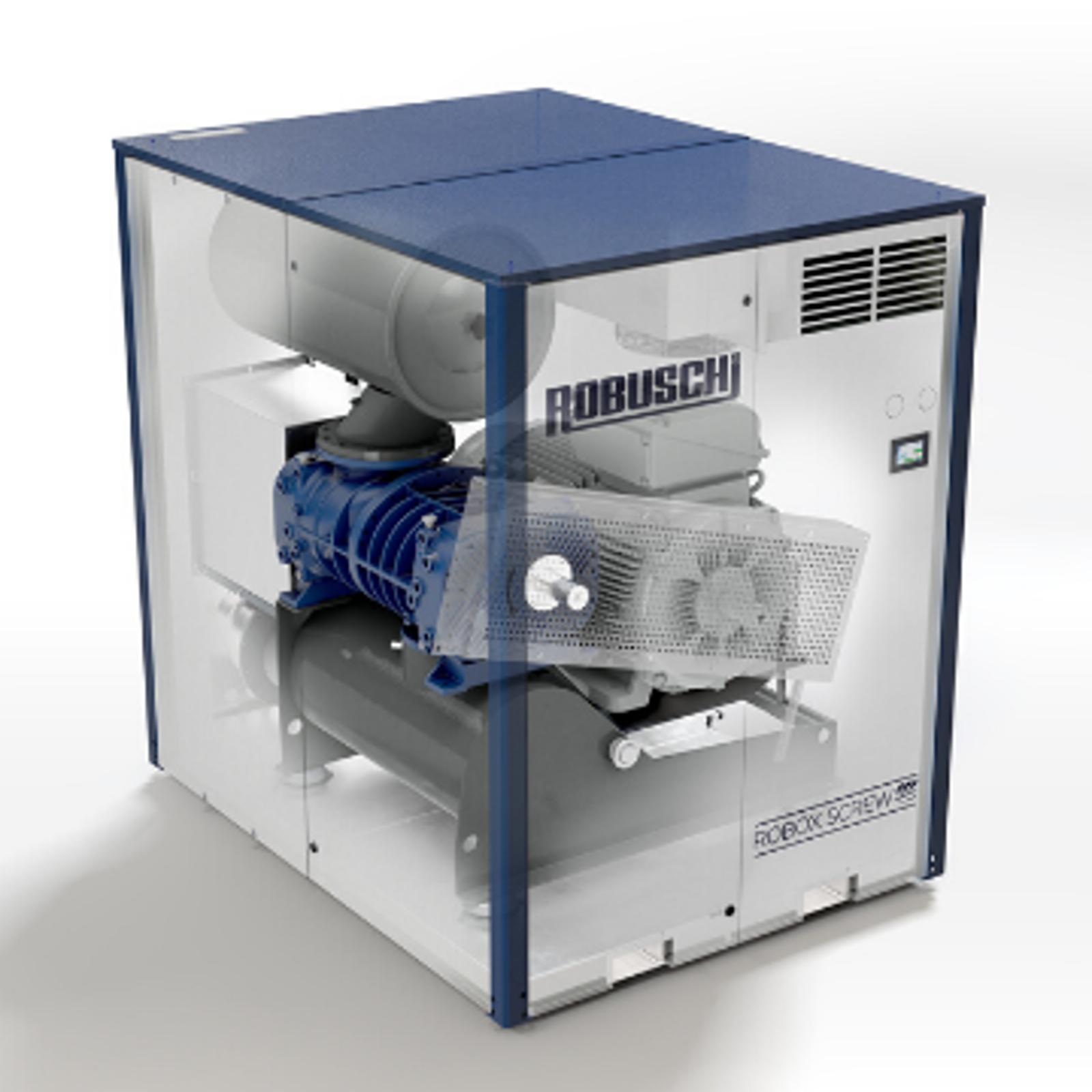
Rotary screw blowers, also known as “helical screw” compressors, use two types of rotors - a male rotor with three convex lobes, and a female one with five concave flutes. Rotating in the opposite direction, the rotors draw the air in between, which results in forming a series of working chambers.

As the gas is sucked in, it is trapped between the rotors and a casing wall. Then, it is compressed while the volume space inside decreases. The process of internal compression leads to a steady, non-pulsating air flow. This minimizes vibration and maximizes the lifetime of a screw compressor.

With oil-free technology, a screw blower operates without oil being introduced into the compression chamber. The intermeshing rotors do not touch each other but maintain a precise, minor air gap in-between. This combination guarantees optimal performance and meets the highest air purity standards at the same time.

Screw Blower Unit4

Is an Oil-free Rotary Screw Compressor Suitable for my Industry?

Choosing the right screw blower requires a deep consideration of the necessary elements utilized in your application. One particular air technology can provide more benefits over the other. For example, oil-lubricated compressors use oil for sealing, lubrication, and cooling, allowing miniscule amounts of lubricating oil to enter the compressed air system.

Oil-free compressors, however, have no oil introduced into the compression chamber, which results in pure compressed air.

Your choice depends on the purity level your application requires. Using ISO quality classes for compressed air and a complete understanding of compressed air quality can help you determine which standard you should apply to your system.

Classification of Compressed Air Quality

To make your air compressor system operate at full swing and prevent the production from shutting down, you need to know your air quality needs. There are some applications, such as food or pharmaceutical production, which require the highest level of air purity. For others, the air quality is more geared to maximize the tools’ lifetime.

Since maintaining air quality plays an essential role in various industries, ISO developed an air purity classification (ISO 8573.1).

It defines six compressed air quality classes. To determine the classification your application requires, you need to consider whether:

  • compressed air quality affects your production and products;
  • poor compressed air quality can limit your productivity and cost-savings;
  • any internal or external ambient conditions have an impact on the compressed air quality in your system.
Iso certificate

How Do I Benefit from Using Oil-free Rotary Screw Blowers?

Screw blowers are positive displacement machines that require a relatively small amount of energy for the compression process. Their oil-free compression chambers reduce downstream filtration requirements. This consequently brings energy consumption savings and a lower total cost of ownership.

In addition, screw technology is suitable for applications requiring a variable speed configuration. It allows the compressor to obtain a wide range of speed levels, even though the energy efficiency level of the air compression at various points of the process stays usually the same.

Screw blower technology is distinguished by the simplicity of having only a few moving parts. As it features almost no contacting parts, screw blowers are more resistant to any wear and tear. This makes them easy to maintain and any service routines are fast and stress-free.

Robuschi Screw Blowers Portfolio

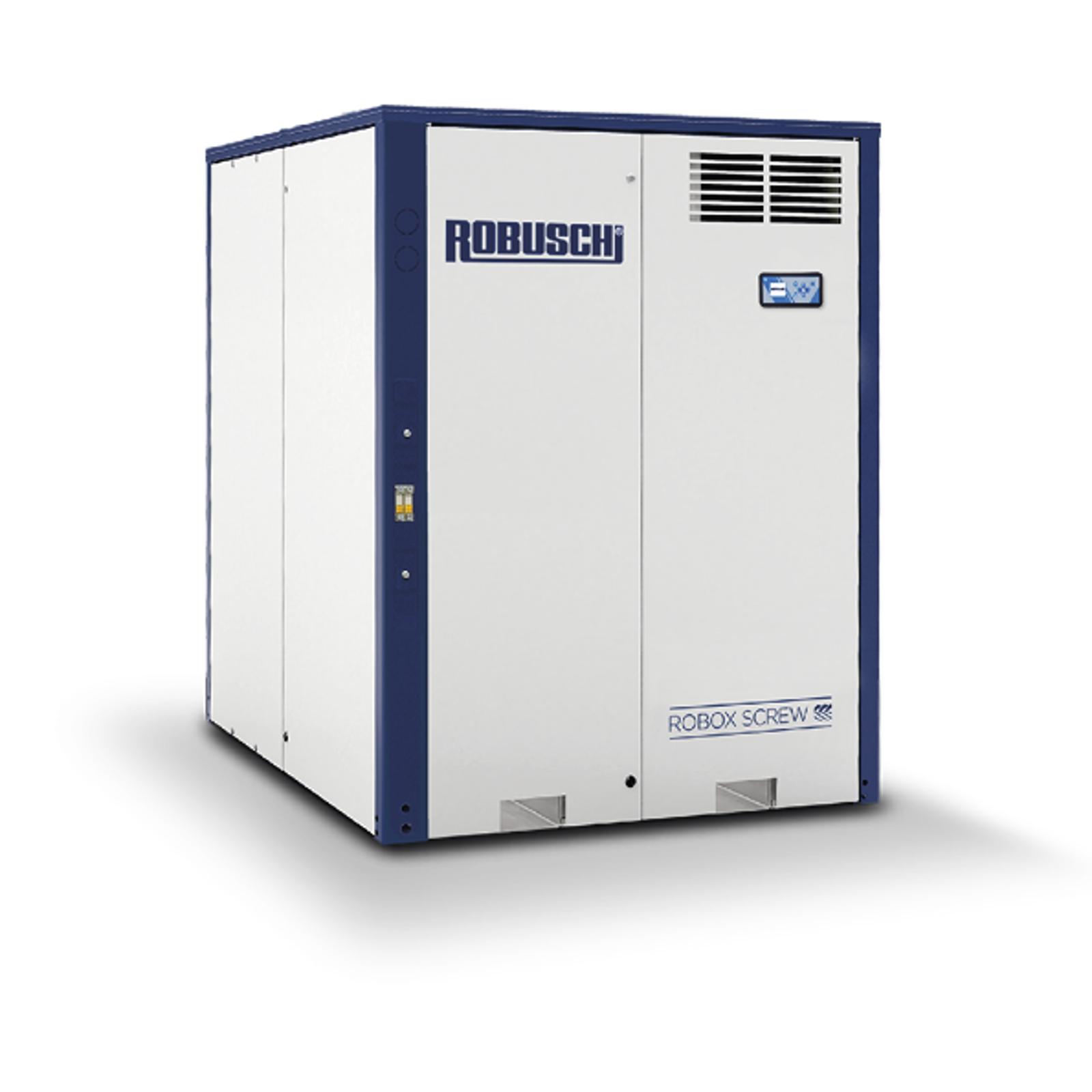
If you opt for an innovative yet energy-efficient solution, we can offer you a wide range of Robuschi’s screw blowers. Our portfolio includes Robox Screw series, equipped with state-of-the-art components.

What are Roots Blowers?

As mentioned previously, there are various compressors that use one basic air compression principle of positive displacement which is used by roots blowers. They are oil-free compressors with two identical and counter-spinning rotors, which operate inside a housing.

As the compression chamber and outlet port come in contact, the compressed air goes back into the housing from the pressure side. The next part of the compression process occurs when the volume of the compression chamber decreases from the continued rotation.

Unfortunately, this operation provides a low efficiency level and high noise. Thus, the number of applications that roots blowers can be used for is limited. In fact, the low-efficiency level of these devices makes them suitable for applications that require very low pressure and single-stage compression.